
Atrial Fibrillation Treatment in Chandigarh
Advanced evaluation and treatment for abnormal and irregular heart rhythms at AB Heart Care.

Atrial Fibrillation Treatment in Chandigarh
Atrial Fibrillation is a common problem affecting thousands of people worldwide. It is characterized by an abnormal and often fast heartbeat and may lead to complications if left untreated.
This heart rhythm problem occurs when the electrical signals in the heart become abnormal, causing the heart to beat rapidly and out of rhythm.
Many people experience AFib as a sudden, unpleasant sensation of their heart racing, while others may have no obvious symptoms and only discover the condition during a physical examination.
If you have signs of Atrial Fibrillation, contact AB Heart Care for evaluation. Our team provides modern treatment options and comprehensive cardiovascular care.
What is Atrial Fibrillation?
Atrial fibrillation (AFib) is a common heart condition characterized by abnormal and frequently rapid heartbeats originating from the upper chambers of the heart, known as the atria.
In AFib, the electrical signals that coordinate the heart’s rhythm become disorganized, leading to erratic contractions of the atria. This may be experienced as palpitations or fluttering in the chest.
The disorganized electrical activity may also reduce the heart’s ability to pump blood efficiently, increasing the risk of blood clots, stroke and heart failure.
AFib may be occasional, persistent or permanent depending on how long and how frequently the episodes occur. Symptoms may include fatigue, dizziness, shortness of breath and chest discomfort, although some patients may have no symptoms.
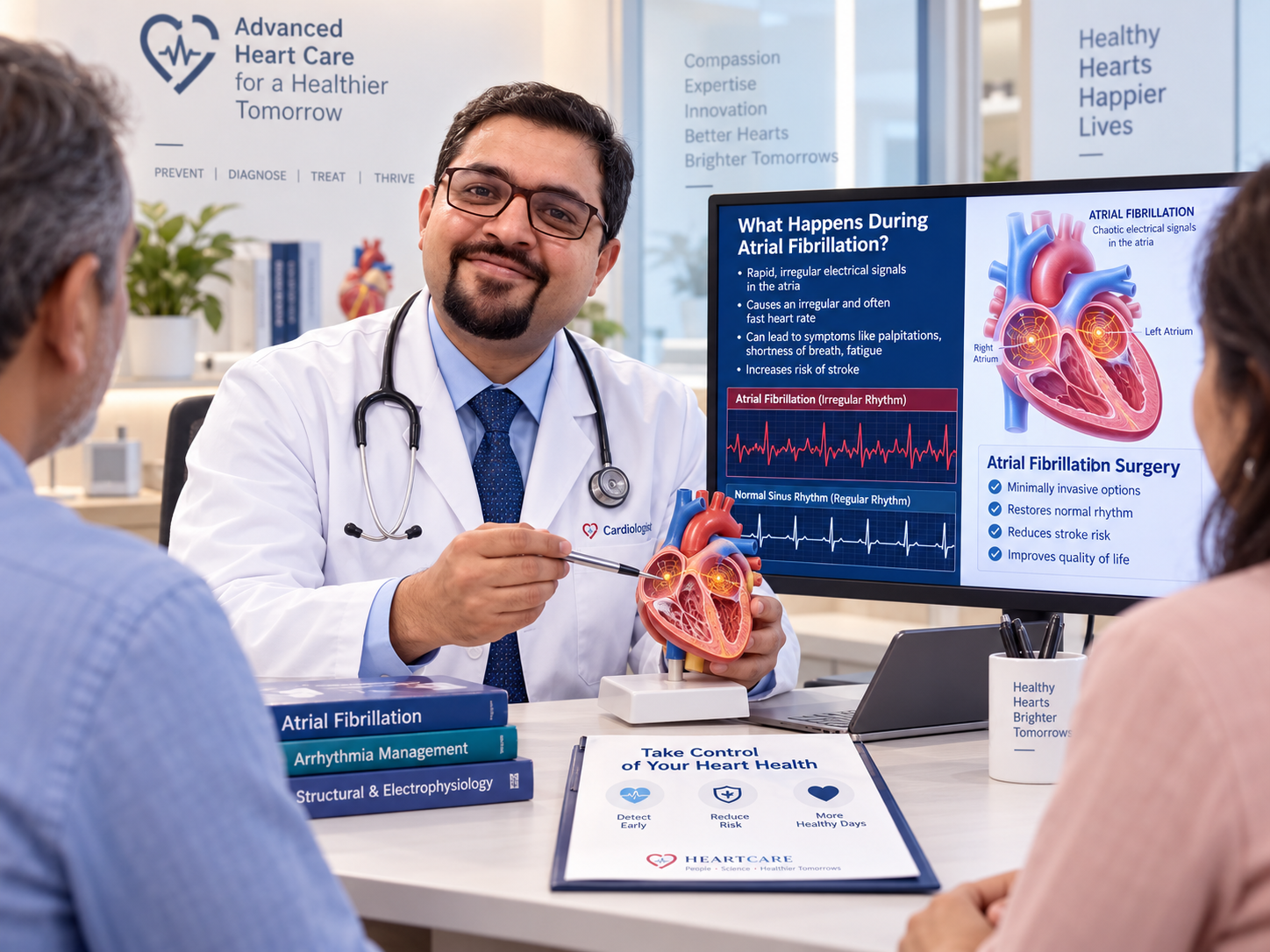
What Happens During Atrial Fibrillation?
During atrial fibrillation, the electrical signals in the atria become disorganized, resulting in rapid and irregular contractions.
The irregular rhythm may cause blood to pool in the atria.
Blood pooling may lead to the formation of blood clots.
A clot travelling from the heart to an artery in the brain may cause a stroke.
An irregular heartbeat can reduce the heart’s pumping efficiency and affect delivery of oxygen-rich blood to organs and tissues.
Over time, this additional strain on the heart may contribute to heart failure or other cardiovascular complications.
What are the signs of atrial fibrillation in adults?
Atrial fibrillation may cause several symptoms, although some individuals can remain asymptomatic.
Pounding or Throbbing
This is a common sign of atrial fibrillation and may feel like palpitations or an irregular sensation in the chest.
Shortness of Breath
AFib can make it difficult for the heart to pump blood efficiently, which may result in shortness of breath, particularly during physical activity.
Lightheadedness or Dizziness
The abnormal rhythm and reduced blood flow may cause dizziness or lightheadedness.
Fatigue
If the heart is not pumping efficiently, a person may feel tired, weak or lacking in energy.
Chest Pain or Discomfort
Atrial fibrillation can cause chest pain or discomfort in some people.
Some people with AFib have no symptoms. Proper medical evaluation is therefore important when an irregular heart rhythm is suspected.
Different types of treatments for Atrial Fibrillation Management
Medications are an important part of Atrial Fibrillation treatment and management. They may be used to control heart rate, maintain rhythm and reduce complications such as stroke.
Rate Control Medications
These medicines help slow the heart rate toward a normal rate. Common medicines may include beta-blockers such as metoprolol, calcium channel blockers such as diltiazem, and digoxin.
Rhythm Control Medications
These medicines aim to restore and maintain a regular heart rhythm. Antiarrhythmic medicines such as amiodarone, flecainide and sotalol may be prescribed.
Anticoagulants
Patients with AFib may be prescribed blood-thinning medicines such as warfarin, dabigatran, rivaroxaban or apixaban to reduce the risk of blood clots and stroke.
Antiplatelet Drugs
In selected cases where anticoagulants are not suitable, antiplatelet medicines such as aspirin may be considered.
Pacemaker Therapy
Pacemaker therapy involves placing a device under the skin that monitors the heartbeat and sends electrical impulses if the heart rate becomes too slow.
Electrical Cardioversion
A controlled electrical shock may be delivered to the heart in an attempt to restore a normal rhythm. This procedure is usually performed in a monitored hospital setting.
Conditions that may cause Atrial Fibrillation
There are several conditions that may contribute to atrial fibrillation.
Most Common Causes
Less Common Causes

How Is Atrial Fibrillation Diagnosed?
Diagnosis may involve physical examination, assessment of symptoms, medical and family history and specific cardiac investigations.
The cardiologist may ask about symptoms, physical activity, diet, previous heart-related conditions and family health history before recommending further medical tests.
Electrocardiogram (EKG or ECG)
One of the most common and quickest diagnostic tools used to measure the heart’s electrical activity.
Echocardiogram
Ultrasound waves are used to create images of the heart and help identify structural abnormalities.
Blood Tests
Blood testing may be recommended to identify underlying conditions such as thyroid disease or infections.
Cardiac MRI
Cardiac MRI provides detailed imaging of the structure and function of the heart.
Take Control of Your Heart Health with Atrial Fibrillation Surgery
At AB Heart Care, patients have access to comprehensive atrial fibrillation treatment and management, including surgical treatment where clinically appropriate.
If you’re looking for Atrial Fibrillation Doctors in Tricity, contact us to schedule a consultation and begin your journey toward better heart health.
Frequently Asked Questions
What are the causes of atrial fibrillation?
Causes may include heart valve problems, previous heart surgery, sleep apnea, heart attack, artery disease, viral infections, thyroid disease, physical stress due to pneumonia or surgery, high blood pressure, lung diseases, and the use of stimulants such as certain medicines, tobacco and alcohol.
Who is at most risk of atrial fibrillation?
Risk factors described on the existing page include age 65 years or above, existing cardiac diseases, thyroid problems, hypertension, alcohol use, obesity, sleep apnea and certain lung diseases.
Is AFib an inherited cardiac disease?
Hereditary AFib is possible, although it is not described as common. People with hereditary AFib may experience symptoms at a younger age and may have a strong family history of the condition.
What are the preventive measures for AFib?
The existing page states that there is no definitive way to prevent AFib, but risks may be reduced by controlling diabetes, hypertension and sleep apnea, maintaining a healthy body weight and avoiding smoking, excessive alcohol consumption and drug abuse.
What are the options for atrial fibrillation treatment?
Treatment options may include medicines to control heart rate and rhythm, blood-thinning medicines to reduce the risk of blood clots and stroke, electrical cardioversion, catheter ablation and, in selected cases, surgical intervention.
How does a pacemaker help in atrial fibrillation?
A pacemaker helps regulate the heart’s rhythm and maintain an adequate heart rate, particularly when treatment or rhythm problems cause the heartbeat to become too slow.
Experiencing an Irregular Heartbeat?
Speak with the AB Heart Care team about evaluation and treatment options for Atrial Fibrillation.