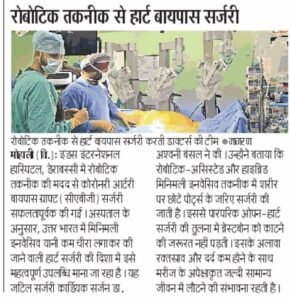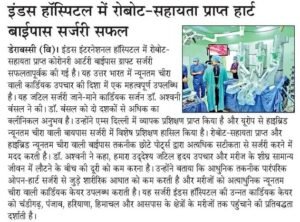
Heart care in North India has reached a new milestone. Indus International Hospital, Dera Bassi, has successfully performed a robotic-assisted Coronary Artery Bypass Graft (CABG) surgery. The achievement was widely covered in the regional press on 6 and 8 October 2026. It shows how advanced, minimally invasive cardiac treatment is becoming available closer to home for patients in Chandigarh, Mohali, Zirakpur, Panchkula and the wider Punjab and Haryana region.
What Happened at Indus International Hospital?
The complex procedure was performed by Dr. Ashwani Bansal, Chief Cardiac Surgeon, MCh (CTVS), AIIMS Delhi. The team used robotic-assisted and hybrid minimally invasive bypass techniques, in which surgeons work through small ports with high precision instead of a large chest incision.
What Is Robotic-Assisted Bypass Surgery?
CABG is performed to restore blood flow to the heart when arteries are blocked. A surgeon uses a blood vessel from another part of the body to bypass the blockage. In traditional open-heart surgery, the surgeon cuts through the breastbone (sternum) to reach the heart.
In robotic-assisted and hybrid minimally invasive bypass surgery:
- The surgeon operates through small ports in the chest.
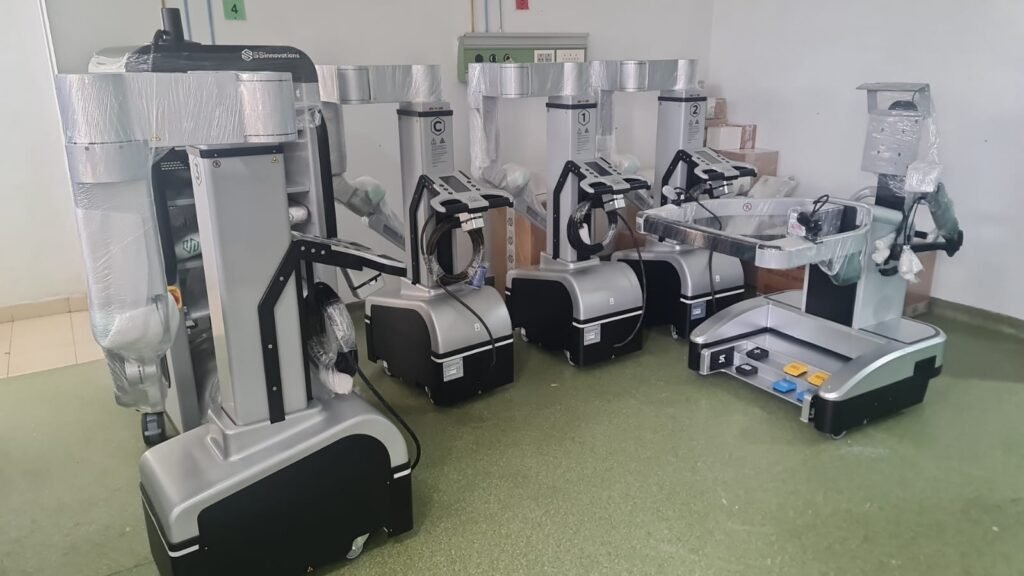
- Robotic arms help the surgeon work with exceptional precision.
- The breastbone does not need to be cut.
This is why the approach is described as a significant step for minimally invasive cardiac care in North India.
Potential Benefits for Patients
Compared with conventional open-heart surgery, these modern techniques may offer:
- No breastbone cutting, avoiding the major physical trauma of open surgery
- Less blood loss
- Less pain after the procedure
- Relatively faster recovery, helping patients return to normal life sooner
Every patient is different, and suitability depends on the person’s heart condition, the location of the blockages and overall health. Your surgeon is the right person to advise whether a robotic or minimally invasive approach fits your case.
Dr. Ashwani Bansal: Experience That Matters
Technology matters, but so does the surgeon behind it. Dr. Bansal has more than two decades of clinical experience. He received 14 years of training at AIIMS New Delhi, where he was part of the heart transplant and heart failure surgery team. He also trained in minimally invasive bypass surgery in Poland (Europe). He treats both adults and children, including bypass, valve and pediatric heart surgery.
Speaking about the milestone, Dr. Bansal said the goal is to reduce the distance between complex heart treatment and a patient’s swift return to normal life. He added that this successful surgery shows how modern technology can reduce the physical trauma of traditional open-heart surgery and help bring advanced minimally invasive cardiac care to more patients.
What This Means for North India
For years, patients seeking advanced cardiac procedures often had to travel long distances. Having robotic-assisted bypass surgery at Indus International Hospital reflects the hospital’s commitment to bringing advanced cardiac care to patients across Chandigarh, Punjab, Haryana, Himachal and nearby regions. Families in the Tricity area and beyond now have another advanced option for treating coronary artery disease.
Should You Consider Minimally Invasive Bypass Surgery?
Speak with a cardiac surgeon if you have:
- Chest pain or pressure on exertion
- Shortness of breath or unusual fatigue
- Diagnosed blockages in your coronary arteries
- Been advised to undergo bypass surgery
An evaluation will help determine whether a minimally invasive, robotic-assisted or conventional approach is best. You can also read more about minimally invasive heart surgery and bypass heart surgery on our website.
See the News Coverage
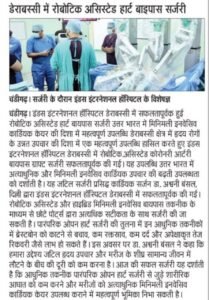
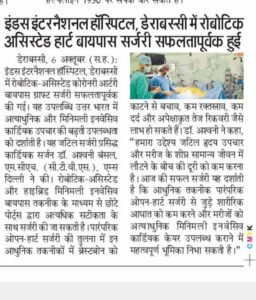
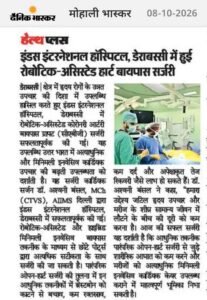
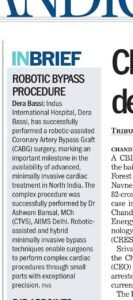
This milestone was featured in leading regional newspapers. See the news cuttings below to read the full coverage of the robotic-assisted bypass surgery at Indus International Hospital, Dera Bassi:
The coverage highlights how robotic-assisted and hybrid minimally invasive bypass techniques allow surgery through small ports, without cutting the breastbone. Newspapers also carried Dr. Ashwani Bansal’s message that the aim is to bring complex heart treatment and a patient’s early return to normal life closer together.
The news reports describe the procedure as an important step for advanced, minimally invasive cardiac care in North India, and as a sign of the growing availability of such treatment closer to home for patients across Chandigarh, Punjab, Haryana and nearby regions.
- Dainik Bhaskar (Mohali Bhaskar), 8 October 2026
- Dainik Jagran, Mohali
- The Tribune (In Brief)
- Other regional Hindi dailies from Chandigarh Tricity